
news
Probability of Precipitation for Outdoor Weddings: Microclimate Decisions Beyond the Rain Icon
A niche outdoor wedding weather guide explaining probability of precipitation, microclimates, radar timing, tent decisions, wind, and guest comfort.

A 30 percent chance of rain can be a non-issue or a tent decision depending on timing, storm type, terrain, and how much flexibility the event has.
This guide answers a very specific search question: what chance of rain should make me rent a tent for an outdoor wedding. It is written for couples, planners, venue managers, photographers, caterers, and families trying to make calm weather decisions before an outdoor wedding, so the emphasis is practical: what to check, what to ignore, and when to change plans before the weather becomes a problem. Learn more in Heat Index vs Feels Like Temperature for Outdoor Workers: The Difference That Changes Break Plans.
Probability of precipitation is often misunderstood as the percentage of time it will rain or the percentage of the area that gets soaked. For event planning, the missing details are timing, coverage, intensity, wind, lightning, and what happens to guests if a shower arrives during vows or dinner.
Outdoor weddings need forecast interpretation because the tolerance for disruption is low. A brief shower at 6 a.m. may not matter; a slow-moving storm at ceremony time can change the whole layout.
Quick Answer
Event weather decisions should convert rain probability into timing, impact, and fallback thresholds. The fastest way to apply that idea is to compare the headline forecast with the smaller signals that control your actual exposure. A daily icon is a starting point, not the decision.
For most readers, the useful workflow is simple: check the official local forecast, scan the hourly details, identify the one hazard that can break your plan, and choose a backup before the forecast window becomes urgent. That habit turns weather from a vague worry into a manageable planning input.
Why This Forecast Niche Matters
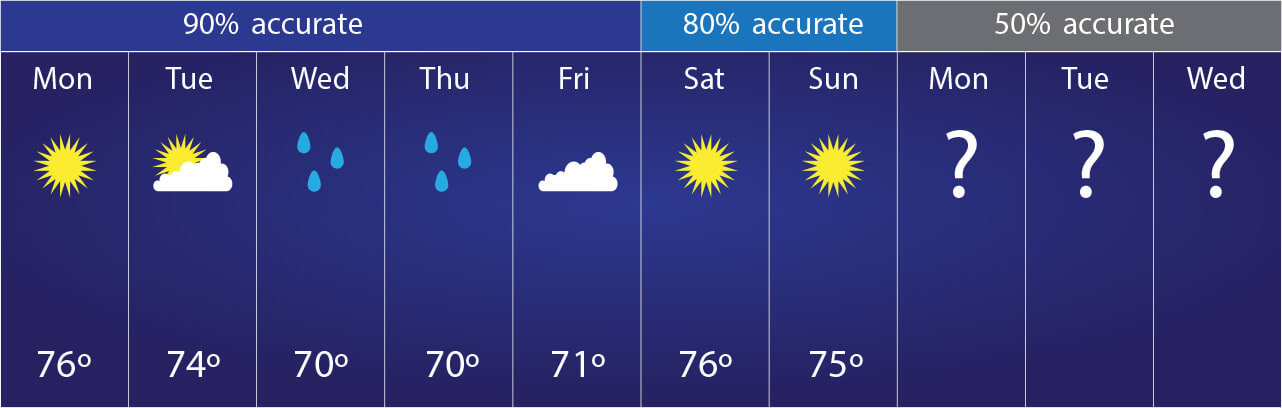
Niche weather questions matter because people rarely experience weather as a regional average. You experience it in a bedroom, on a sports field, on a specific bridge, in a valley, at a venue, or in a neighborhood that drains poorly. A 30 percent chance of rain can be a non-issue or a tent decision depending on timing, storm type, terrain, and how much flexibility the event has.
That is why broad forecast summaries can feel wrong even when meteorologists did their job. The public forecast may describe the air mass correctly while missing the exact surface, building, slope, road, or schedule that controls your risk. The goal is not to outguess the forecast. The goal is to read the part of the forecast that matches your exposure.
The Weather Setup Behind the Problem
Hourly PoP
Start with hourly pop. Daily PoP hides whether the risk overlaps ceremony, photos, or dinner.
Rainfall rate
Rainfall rate is one of the first details to check. Light drizzle and heavy convective rain require different plans.
Lightning risk
Do not treat lightning risk as background noise. Thunder changes outdoor safety even if rain is brief.
Wind gusts
For this topic, wind gusts often separates a routine day from a day that needs a plan. Tents, florals, candles, and signage are often more sensitive to wind than rain.
Venue drainage
The forecast detail most people skip is venue drainage. Grass, slopes, gravel, and low spots recover differently after morning rain.
Temperature and humidity
Use temperature and humidity to translate "what chance of rain should make me rent a tent for an outdoor wedding" into a practical decision. Guest comfort may require shade, fans, heaters, or hydration.
A 72-Hour Planning Workflow
The best weather decisions usually start before the final forecast is perfect. At 72 hours, you are not looking for certainty. You are looking for the main scenario, the plausible failure mode, and the cost of waiting.
- Set decision deadlines for tents, floor mats, heaters, fans, and ceremony moves.
- Use hourly forecasts and radar trends instead of one daily icon.
- Ask the venue where water collects after a quick downpour.
- Plan photography windows around cloud cover, wind, and lightning risk.
- Prepare guest communication that explains parking, footwear, and arrival changes.
- Keep the fallback plan emotionally acceptable, not just technically possible.
How to Read the Hourly Forecast

Open the hourly forecast and find the period that overlaps your real decision. For what chance of rain should make me rent a tent for an outdoor wedding, the daily summary can hide the most important part of the day. The relevant hour may be overnight, during school pickup, at ceremony time, near a commute, or just after a front passes.
Read the variables in pairs. Temperature plus dew point explains comfort better than temperature alone. Wind speed plus gusts explains exposure better than a single wind number. Rain chance plus rainfall rate explains disruption better than a droplet icon. Cloud cover plus wind direction can explain why one neighborhood stays gray while another clears.
Then ask whether the forecast is describing a gradual hazard or a threshold hazard. Gradual hazards build through the day and give you chances to adjust. Threshold hazards can flip the plan quickly: lightning close enough to hear, water over a road, wind strong enough to make a tent unsafe, or smoke mixing to the surface.
Local Clues That Confirm the Forecast
Local clues matter because official observations are often several miles away from the exact place where you feel the weather. These signs do not replace the forecast, but they help you decide whether the atmosphere around you is behaving as expected.
- Storms repeatedly form along the same hills or lake breeze.
- The venue lawn stays soft after irrigation or morning drizzle.
- Flags and table linens move before rain starts.
- Radar cells weaken before reaching your location or strengthen nearby.
- Humidity makes guests uncomfortable even under clouds.
Common Mistakes

- Treating 20 or 30 percent as automatically safe.
- Waiting until the morning of the event for rental decisions.
- Ignoring wind because the sky looks dry.
- Forgetting that wet grass can matter after rain ends.
- Using a city forecast for a hilltop, lakeside, vineyard, or coastal venue.
What to Watch Next
NWS lightning guidance is central for dry thunderstorm, youth sports, hiking, roofing, and outdoor work decisions. Use it as background context, then rely on your local forecast and warnings for timing.
If the source is a seasonal or climate product, use it to frame the background risk. If the source is a safety page, use it to define action thresholds. For day-to-day timing, check the National Weather Service point forecast, local watches and warnings, radar, and nearby observations. Learn more in El Nino Watch May 2026: What It Could Mean for Late Summer and Fall Weather.
Related OpticWeather Guides
- How To Plan A Weather Resilient Outdoor Wedding
- Chance of Rain vs Probability of Precipitation
- How to Read Weather Forecast
- Forecast Interpretation and Accuracy
- Weather Safety and Preparedness
Frequently Asked Questions
Is this the same as the regular weather forecast?
No. The regular forecast gives the broad expected conditions. This guide explains how to interpret those conditions for a narrow decision where timing, exposure, and local details matter.
Which forecast number should I check first?
Start with the number that most directly controls the hazard. For this topic, that means the signals listed above, especially hourly pop and rainfall rate. After that, check the hourly timing and any official alerts.
Why do weather apps disagree on this?
Apps can use different models, update schedules, icons, and thresholds. One app may smooth a local hazard into a broad daily summary while another highlights the risky hour. When the stakes are high, compare the app with official forecasts and observations.
When should I stop waiting for a clearer forecast?
Stop waiting when the cost of delay becomes higher than the cost of preparing. If rentals, travel, safety equipment, vulnerable people, animals, or outdoor crews are involved, set a decision deadline before the forecast window arrives.